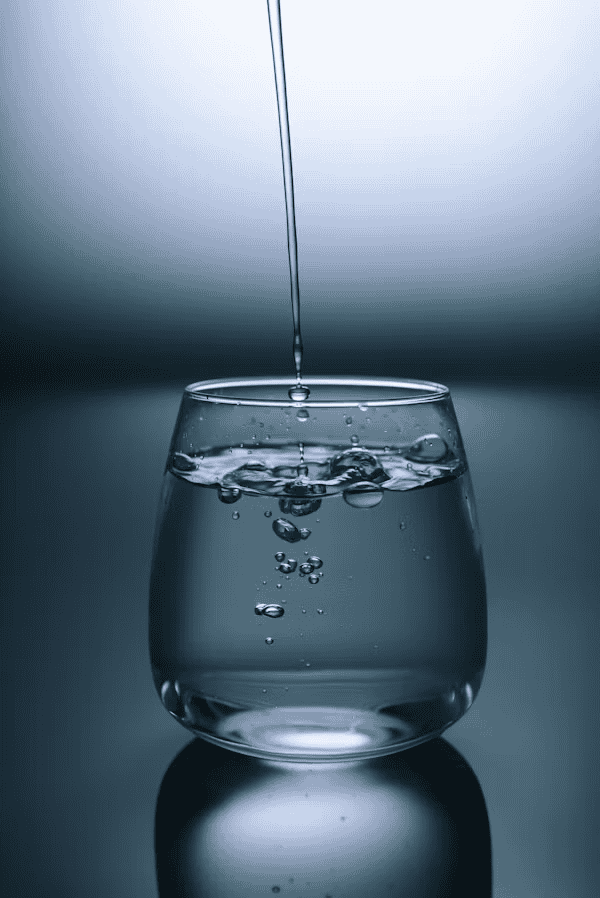
The “drink eight glasses of water a day” rule is one of the most repeated health guidelines that exists, and it’s also one of the least evidence-based. It’s not that it’s dangerously wrong — for a lot of people it happens to be roughly in the right range — but it’s a coincidence more than a rule, and it ignores nearly everything that actually determines how much water an individual person needs.
Where the 8-glasses number actually came from
Tracing the origin of this guideline is surprisingly messy. It seems to trace back to a decades-old recommendation that suggested people needed about 2.5 liters of fluid a day — but crucially, that original guidance included water from food, not just water you drink separately. Somewhere along the way, the “includes food” part got dropped, and the number got rounded into the simple, memorable “8 glasses of water” that stuck in public consciousness. It was never based on a study of individual hydration needs varying by person — it was a rough population-level estimate that got oversimplified into a universal rule.
What actually determines your hydration needs
Individual water needs vary substantially based on several real factors:
- Body size — larger bodies generally need more total fluid than smaller ones
- Activity level — someone exercising heavily or sweating significantly needs meaningfully more than someone sedentary
- Climate — hot or humid environments increase fluid loss through sweat; so does high altitude
- Diet — water-rich foods (fruits, vegetables, soups) contribute meaningfully to total fluid intake; someone eating a lot of these needs less from drinking directly
- Other fluids — coffee, tea, milk, and other beverages all count toward total fluid intake, despite the persistent myth that caffeinated drinks don’t “count” (mild diuretic effect from caffeine is real but minor and doesn’t offset the fluid itself in any meaningful way for regular consumers)
- Individual physiology — pregnancy, breastfeeding, certain medications, and health conditions can all shift fluid needs up or down
Because of this many-variable reality, a single fixed number for every person was always going to be an oversimplification.
A more useful way to gauge hydration
Rather than counting glasses, a much more reliable everyday indicator is urine color — pale yellow generally indicates adequate hydration, while noticeably dark yellow suggests you likely need more fluid. This isn’t perfect (certain vitamins and medications affect urine color too) but it’s a far more individualized, real-time signal than a fixed daily number that ignores your actual body size, activity, and environment that day.
Thirst is also a legitimately useful signal
There’s a persistent myth that “by the time you’re thirsty, you’re already dehydrated,” which has led a lot of people to override their body’s own signal in favor of forcing down water on a schedule. For most healthy people in normal conditions, thirst is actually a reasonably reliable indicator of fluid need — the exception being situations like intense exercise or hot weather, where thirst can lag slightly behind actual fluid loss, making proactive drinking more useful in those specific contexts.
The U.S. National Academies set an adequate total water intake of about 3.7 liters per day for men and 2.7 liters for women, covering all beverages and food (about 20 percent usually comes from food), for healthy adults in temperate climates. This is a reference level based on typical intakes, not a requirement, and the report concluded that drinking when thirsty meets the needs of most people.
The practical takeaway
- There’s no universal number that applies accurately to everyone — body size, activity, climate, and diet all shift real needs meaningfully
- Water-containing foods and other beverages genuinely count toward hydration, not just plain water
- Urine color and thirst are more individualized, practical indicators than a fixed glass count
- Higher activity, heat, or illness (fever, vomiting, diarrhea) are the situations where proactively drinking more, rather than just responding to thirst, actually makes sense
The “8 glasses” rule isn’t dangerous advice, and it’s a fine rough starting point for someone who wants a simple number. But treating it as a precise, universal requirement misses that hydration needs are genuinely individual, and a healthy body already has decent built-in tools (thirst, urine color) for figuring out what it actually needs on a given day.
- National Academies of Sciences, Engineering, and Medicine. Report sets dietary intake levels for water, salt, and potassium to maintain health and reduce chronic disease risk. https://www.nationalacademies.org/news/report-sets-dietary-intake-levels-for-water-salt-and-potassium-to-maintain-health-and-reduce-chronic-disease-risk
- Valtin H. Drink at least eight glasses of water a day. Really? Is there scientific evidence for 8 x 8? American Journal of Physiology: Regulatory, Integrative and Comparative Physiology. 2002;283(5):R993-R1004.